FAQs
Choosing a fluid
What's the difference between soluble oil, semi-synthetic, synthetic and straight oil?
Soluble oil is what most CNC shops run on steel and iron. It leaves a light film of oil on parts and machines, which helps keep rust away, but it also mixes with any tramp oil that leaks into the sump. Synthetics are good for grinding and lighter machining. Fine swarf drops out of them quickly, and tramp oil floats to the top where you can skim it off, so the sump tends to last longer. Semi-synthetics sit between the two and are a good fit for cast iron. Straight oil is used neat, without water. It gives you the most lubrication and never foams, which is why you see it in high-pressure through-tool work, but it doesn't carry heat away as well as a water-based fluid.
Which coolant should I use on aluminum, steel, stainless or cast iron?
Start with the metal, because a coolant made for aluminum usually won't do a good job on steel. If you cut aerospace aluminum and staining worries you, look at ICC 3601. ICC 2676 is a heavy-duty choice for steel and non-ferrous work, cast aluminum included. For cast iron, stainless, carbon and alloy steel or nickel alloys, we'd point you to ICC 2695, a full synthetic. ICC 3602 is for moderate-duty work on steel, copper, brass, bronze and aluminum. If you're cutting titanium, Inconel or something more exotic, give us a call on 800-729-1570 and we'll talk it through.
Which coolants won't foam in high-pressure or through-spindle systems?
ICC 2676, 2684 and 2686 are rated low-foaming up to 3,000 PSI. ICC 2695 and 3602 are rated up to 2,400 PSI. If you can't have any foam at all, use a straight oil. It doesn't foam, and it's often used for high-pressure through-tool work.
Which coolants are free of chlorine, boron, formaldehyde or nitrites?
ICC 2696 has the longest list. It contains no nitrites, sulfur, chlorine or other halogens, phenols, heavy metals, silicones or phosphates, and it's formaldehyde-free. ICC 2676 and ICC 2686 are chlorine-free and formaldehyde-free. ICC 2695 has no nitrites, sulfur, phenols, heavy metals or silicones. For forming work, ICC 2521 is boron-free. Before you approve any of them for your safety file, check the SDS.
Which OEM approvals do your fluids have?
ANTI-RUST 118-H is approved by Ford, General Motors, Caterpillar and Cummins. The Ford spec number is WSK-M7C80-A. You'll find our other approved products in the Aerospace-Approved and Automotive-Approved sections. If you have to meet a particular spec, call us with the number.
Is a cheaper coolant really cheaper?
Not always. Industry estimates put metalworking fluid at up to 10% of what it costs to make a finished part, and tooling at about 6%. Coolant has a big effect on how long your tools last, so a fluid that's cheaper by the gallon can end up costing you more in worn tools. It's worth working out the cost per part before you switch.
Running & maintaining coolant
What concentration should I run, and how do I check it?
Most of today's fluids are made to run somewhere between 3% and 10%. Check it with a refractometer. pH won't tell you much, because it stays about the same across a wide range of concentrations. If the coolant is dirty, pour a little into a paper cup and leave it for 10 minutes. Then poke a hole in the side of the cup and take your reading from what runs out. Run it too lean and you lose tool life and rust protection. Run it too rich and you waste concentrate, and your operators can end up with skin problems.
How should I mix and top up coolant?
The rule to remember is OIL, which stands for Oil In Last. Put the water in first and then add the concentrate, never the other way round. It's best to mix it before it goes into the sump. When you top up, don't use plain water or plain concentrate. We go by what we call the 15 principle. If you filled the sump at 20:1 and it now reads too rich, top up with a 35:1 mix, let it run for a few minutes and check it again.
Why does my coolant smell, and how do I stop it going rancid?
It's usually tramp oil. Way lube, hydraulic oil and spindle oil leak into the sump, float on top and cut off the air, and that's when the bacteria behind the smell take hold. A wheel skimmer on a hardware-store timer will clear most of it, and an hour or two of skimming is normally enough. Keep chips and fines out of the sump. If a machine sits idle, a small aquarium pump will keep air moving through it. Don't use bleach as a biocide, because it shortens the life of the fluid. If the system is already badly fouled, add ICC 3483 (GTFO!) at 1 to 3 gallons per 100 gallons.
How do I clean out a sump before switching coolants?
Add a biocide about 24 hours before you drain. Drain the old fluid and dispose of it properly, then dig out the chips and swarf. Fill with water and an alkaline cleaner, run it for 15 to 20 minutes, then pump it out and rinse. If you're using GTFO, follow its own instructions instead. Spray the bare metal with a half-and-half mix of new concentrate and water so it doesn't flash rust. Change the filters, then refill, adding the oil last.
Ordering & support
Can you analyze my used coolant?
Yes. Call 800-729-1570 and ask for a Fluids Technical Specialist. Or fill in our Sample Submission Form and send it with at least 8 to 16 oz (250 ml) of the fluid to: Fluids Technical Specialist, Active Cutting Fluids, 2628 N. Mascher Street, Philadelphia, PA 19133. Let us know what problems you're having with it.
Where do you ship from, and how fast?
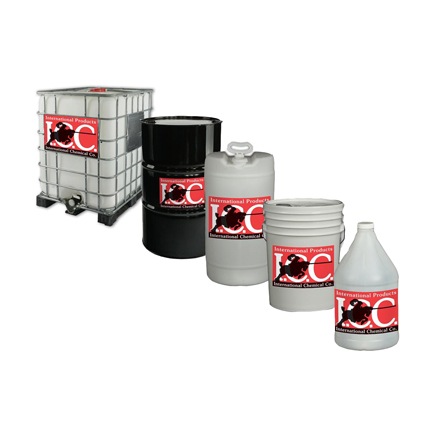
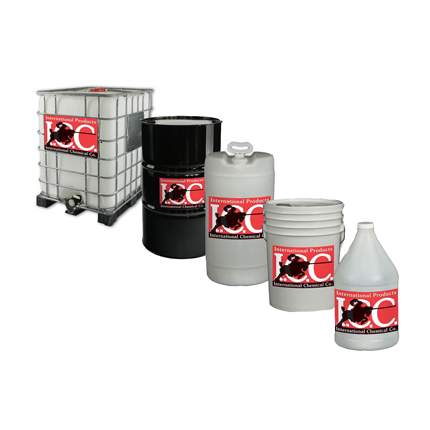
Fluids go out from Springfield, MA or Philadelphia, PA, to customers across the USA, normally the next business day. If you need an order to leave the same day, call us before 1 pm ET. Boxes under 70 lb go UPS, and heavier orders go with a freight company. If you'd rather use your own freight account, put the details in Order Notes at checkout. Most of our fluids come in 5-gallon pails and 54- or 55-gallon drums, and a few come in 1-gallon jugs. There's more on our shipping page.